

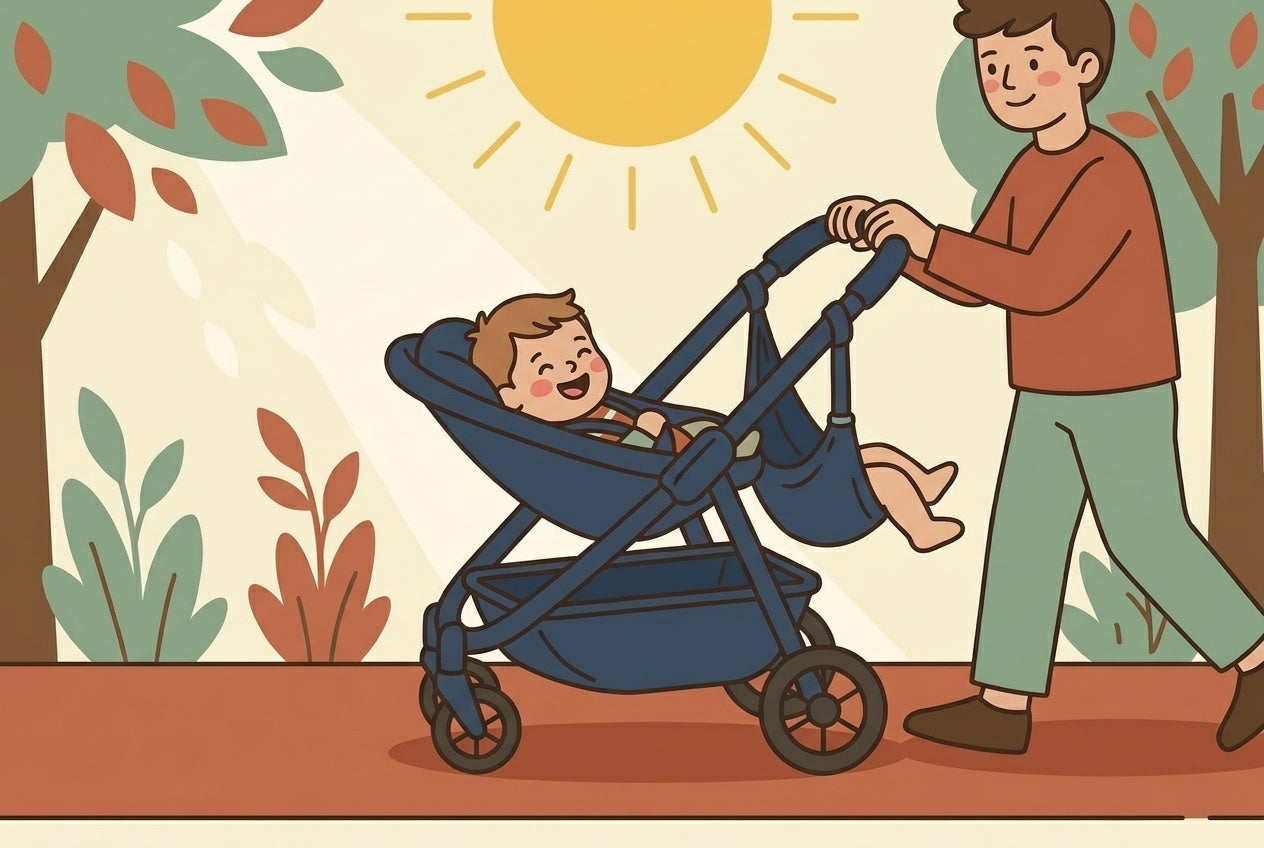
Your toddler has been sitting in the hammock seat for ten minutes and now they're wriggling, complaining, or asking to get out. Sound familiar? The good news: comfort on long walks comes down to three simple things — how the seat is set up, how you pace the walk, and how you handle the weather. Get those three right and a hammock seat can carry a tired toddler happily for 30 minutes or more.
Key Takeaways
Strap tension is the single biggest comfort lever — too loose and the seat sags uncomfortably.
A thin folded muslin or travel cushion can make a real difference on longer walks.
Rotating between walking and sitting keeps toddlers happier and more engaged.
Weather matters — a light blanket in the cold and a sun hat in the heat go a long way.
Hoppie is designed for children from around 18 months to 5 years old, up to 20 kg / 44 lbs.
Setup tweaks parents often miss
Most comfort problems with a stroller hammock seat come from one of three setup issues: straps that aren't tight enough, no padding at all, or a seat that sits at the wrong height. All three are easy to fix once you know what to look for.
Strap tension
This is the most common reason toddlers feel uncomfortable in a hammock seat — and the most common thing parents overlook after the first install. If the straps are too loose, the hammock sags deeply in the middle. That means your child sits with their back curved, their knees up near their chest, and their weight pressing on the wrong part of their body. After ten minutes, that stops being comfortable.
A properly tensioned hammock seat should sit relatively flat, like a shallow curve rather than a deep U. When your child sits in it, there should be very little additional sag. Think of it like a camp hammock: the ones you lie in comfortably are gently curved, not sagging to the floor.
The fix is simple. Before your next walk, load the seat with your hand (pressing down firmly in the centre) and take up any slack in the straps. The fabric should feel taut, not rigid, but with clear resistance. Once you've done it a few times, it takes under a minute.
Always follow Hoppie's installation instructions and check your stroller manufacturer's maximum load capacity before use.

Adding a thin cushion
Hammock fabric is supportive, but on walks longer than 20 minutes, a little extra padding can make a real difference — especially for younger toddlers who have less natural padding of their own.
You don't need anything special. A folded muslin cloth, a small travel pillow, or a thin seat pad all work well. The key is thin: thick cushions raise your child's centre of gravity in the seat, which can feel less stable. A single folded muslin is usually the sweet spot — soft enough to add comfort, thin enough not to change the fit.
Avoid anything fluffy that your child might sink into. The goal is light support, not deep cushioning. And always make sure whatever you add stays in place — a sliding cushion under a moving child is more annoying than no cushion at all.
Adjusting seat height
The hammock seat should sit at a height where your child's feet dangle freely or rest lightly. If the seat is too high, their legs hang unsupported and the edge of the fabric presses on the back of their thighs. If it's too low, their feet drag on the ground.
Most parents find the right height on the first install, but it's worth re-checking if your child has grown recently or if a different child is using the seat. Small adjustments to strap length can shift the height enough to make a noticeable difference in comfort.
A simple test: sit your toddler in the seat and watch their legs. They should hang naturally, with the knees at roughly the same level as the hips or slightly below. If the knees are noticeably higher than the hips, try lowering the seat slightly.
How to keep walks comfortable for 30 minutes or more
Even the best-set-up hammock seat won't keep a toddler content indefinitely. The secret to longer walks isn't just equipment — it's pacing. Two small habits make a big difference.
Water and snacks
A seated toddler gets bored faster than a walking one. Snacks and a sippy cup solve two problems at once: they give your child something to do, and they keep blood sugar and hydration steady — both of which affect mood more than most parents expect.
The American Academy of Pediatrics recommends that toddlers drink water consistently throughout the day, especially during physical activity. Even if your child is sitting rather than running, warm weather or dry air can dehydrate them faster than you'd think. Keep a small water bottle accessible and offer it every 15 to 20 minutes on longer walks.
For snacks, go for low-mess options that don't require much handling — small pieces of fruit, crackers, or rice cakes. Avoid anything that crumbles heavily or requires two hands to eat. The goal is calm and content, not a cleanup project.

Rotation: walk a bit, sit a bit
The hammock seat works best as part of a rhythm, not as a permanent perch for the whole walk. Most toddlers in this age range want to explore — they'll happily walk for five or ten minutes, then tire, then want to sit. Matching the seat to that natural rhythm makes walks feel easier for everyone.
A good pattern for longer outings: let your toddler walk from the start. When they start to slow down or ask to be carried, that's the signal to put them in the seat. Let them ride for ten to fifteen minutes while you cover ground, then invite them to walk again when you reach something interesting — a fountain, a playground, a shop window.
This walk-sit-walk rhythm does two things. It keeps your toddler mentally engaged (they feel like participants, not passengers), and it gives their body a rest without letting them stiffen up from sitting too long in one position. For parents, it also means you're not fighting them into the seat — you're offering it at exactly the moment they want it.
Most toddlers will naturally want to get out again after 15 to 20 minutes. That's healthy and normal. The seat is there for the moments when tired little legs need a break — not to replace walking altogether.
Heat, cold, and weather comfort
The same walk can feel completely different to a toddler in July versus November. A few small adjustments to how you dress and equip your child in the seat can make outdoor walks enjoyable year-round.
Hot weather
In warm weather, the fabric of the hammock seat can trap heat against your child's back and bottom — the same problem you get with any fabric seat in summer. A few things help.
Dress in light, breathable layers. Cotton or linen fabrics allow more airflow than synthetics. Loose-fitting clothing lets air circulate between your child and the seat.
Use a sun hat. Toddlers in the hammock seat sit at roughly hip height — lower than the main stroller seat — which means they can be more exposed to low-angle sun. A wide-brimmed hat makes a big difference.
Apply sunscreen to the backs of legs and arms. These areas are often missed when the child is dressed for the outdoors but then sits in an open seat with limbs exposed.
Walk during cooler parts of the day when possible — morning or late afternoon. Avoid long walks in direct sun between midday and 3pm, especially in summer.
Offer water frequently. Toddlers don't always register thirst until they're already dehydrated. Offer the sippy cup proactively, not just when they ask.
Cold or rainy walks
In cooler weather, a seated child gets colder faster than a walking one. When your toddler is moving, their body generates heat. When they're sitting still in the hammock, they're not — and the wind chill from walking speed adds to the effect.
Use a lightweight blanket or pram blanket. A small fleece blanket draped over the lap and tucked around the legs is the easiest solution. It doesn't restrict movement and it's easy to remove when your child gets back up to walk.
Layer before you leave. It's easier to remove a layer than to add one mid-walk. A base layer, a light fleece, and a wind-resistant outer layer covers most cool-weather scenarios.
Check hands and ears regularly. These are the first places toddlers feel the cold and often the last they'll mention. Mittens and a hat are worth the minor battle at the start of a walk.
In light rain, a stroller rain cover over the main seat doesn't reach the hammock position. A small rain poncho or waterproof outer layer keeps your child dry without needing a full rain cover. Some parents keep a spare muslin in the bag to dry the seat quickly if it gets wet before use.

Always supervise your child while using Hoppie, and make sure they're dressed appropriately for the conditions. A comfortable child is a safe child — and a much happier one.
A few more comfort wins worth knowing
Beyond setup and weather, a handful of small habits consistently come up when parents talk about what makes long walks easier.
Let your toddler get in and out independently when possible. Toddlers who feel in control of the seat — choosing when to sit, choosing when to walk — tend to use it more willingly and sit in it longer.
Keep something interesting in the seat. A small toy, a board book, or a favourite comfort item gives your child something to do beyond watching the world go by. Even ten minutes of occupied sitting feels shorter than ten minutes of bored sitting.
Check in verbally. A quick "are you comfy back there?" every few minutes lets you catch small problems — an uncomfortable seam, a foot that's gone to sleep — before they become big ones. Toddlers often won't volunteer that something is wrong until they're already upset.
Don't skip the re-tighten after the first few uses. New straps settle slightly with use. After two or three outings, it's worth checking the tension again and taking up any slack that has appeared.
FAQ
How do I make a stroller hammock more comfortable?
The three biggest levers are strap tension, a thin cushion, and pacing. Make sure the straps are tight enough that the seat sits in a shallow curve rather than sagging deeply. Add a folded muslin or thin travel pad for extra softness. And use the walk-sit-walk rhythm rather than keeping your toddler in the seat for long unbroken stretches.
Can I add a cushion to a hammock seat?
Yes — a thin cushion works well. A folded muslin, a small travel pillow, or a thin seat pad all add comfort without changing the fit significantly. Avoid thick or fluffy cushions, which raise your child's centre of gravity and can feel less stable. Whatever you use, make sure it stays in place and doesn't slide under your child while walking.
How long can a toddler stay on a hammock seat?
Most toddlers are comfortable for 15 to 20 minutes at a stretch, and that's usually about how long they want to sit before they're ready to walk again. On longer outings, a walk-sit-walk rhythm — letting them walk when they want to and sit when they're tired — typically works better than asking them to stay seated the whole time. There's no hard rule; follow your child's cues.
Is it OK for a toddler to nap on a hammock seat?
Short, light dozing happens and isn't unusual. For sleep, the main stroller seat — which is designed for recline and head support — is the better option. If your toddler does nod off in the hammock seat, slow down and keep a close eye on their head position. Always supervise your child while using Hoppie.
What age and weight is the hammock seat designed for?
Hoppie is designed for children from around 18 months to 5 years old, up to 20 kg / 44 lbs. If your child is close to or over that weight limit, it's time to move on from the seat. Always check your stroller manufacturer's maximum load capacity as well as Hoppie's own rating before use.
Why does my toddler keep wriggling in the seat?
Wriggling usually means one of three things: the straps are too loose and the seat is sagging, your toddler is bored and wants to walk, or they're too hot or too cold. Check strap tension first — it's the most common culprit. If the tension is right, try a snack, a toy, or simply inviting them to walk for a bit. Weather comfort is worth checking too, especially on warm days.
Will the hammock seat work in cold weather?
Yes — with the right preparation. A seated child gets colder faster than a walking one, so dress your toddler in one extra layer beyond what you'd choose if they were walking the whole time. A light fleece blanket over the lap is the simplest solution for cool days. Check hands, ears, and feet regularly, as toddlers often don't mention feeling cold until they're quite uncomfortable.
Does the seat position affect posture?
It can, if the setup isn't right. A correctly tensioned hammock seat supports a natural sitting posture, with hips and knees at a comfortable angle and feet dangling freely. If the seat sags too much, your child ends up in a deep bucket position that can feel uncomfortable over time. Adjust strap tension so the seat sits in a gentle, shallow curve — that's the sweet spot for both comfort and posture.
Hoppie is designed for comfort — a few tweaks make it even better
Most of what makes a stroller hammock comfortable on long walks isn't about the seat itself — it's about how you use it. Tight straps, a thin cushion, the right pacing, and a little weather planning turn a good seat into a genuinely easy part of your daily routine.
Hoppie is designed for children from around 18 months to 5 years old, up to 20 kg / 44 lbs. It's a practical second seat for everyday walks, school runs, and longer outings — for parents who want a smart solution without buying a bulky double stroller.
Keep the stroller you love. Add a second seat when you need it.
Disclaimer: Hoppie is an independent product and is not affiliated with, endorsed by, sponsored by, or approved by any stroller brand. Always follow Hoppie's installation instructions and check your stroller manufacturer's maximum load capacity before use. Always supervise your child while using Hoppie.