

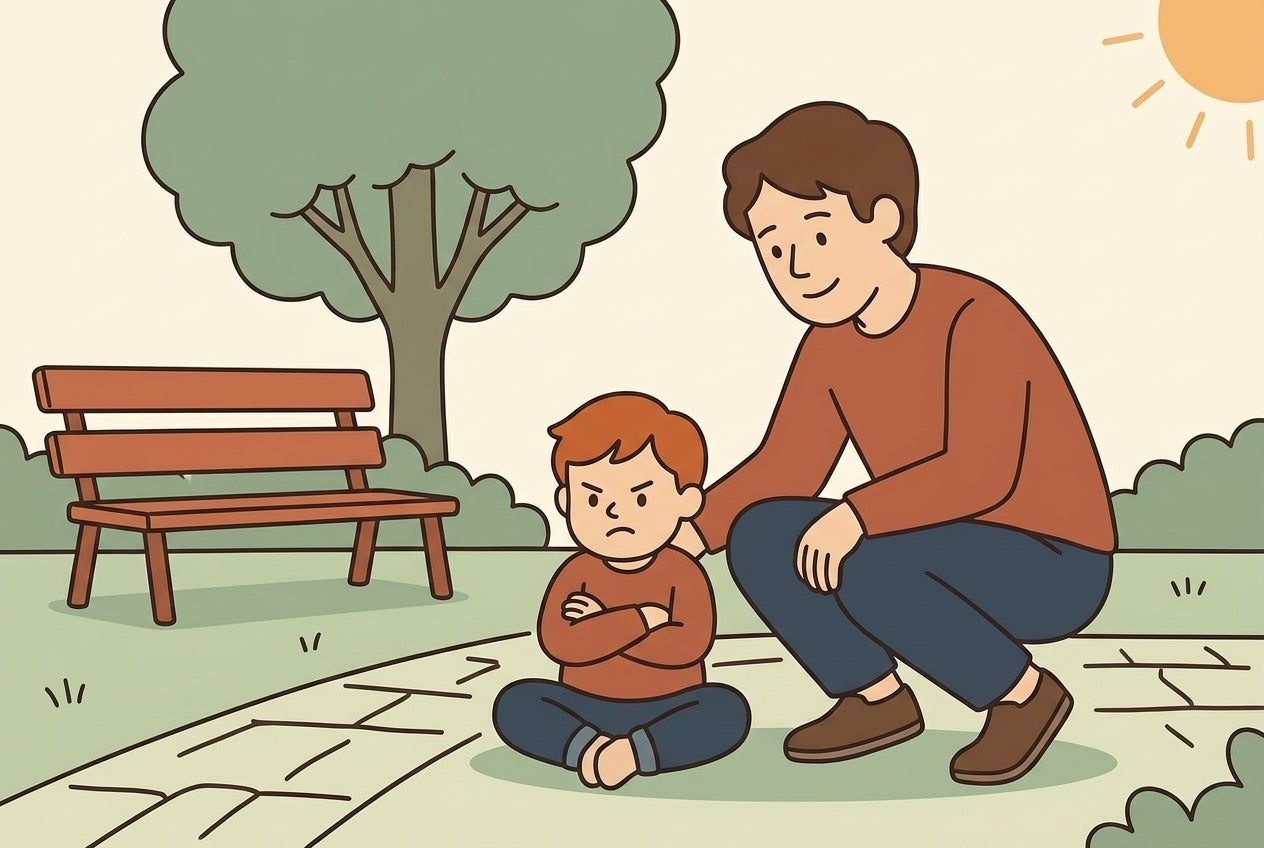
Your toddler was fine five minutes ago. Now they're sitting on the pavement, arms crossed, going nowhere. It happens to almost every parent — and it's rarely just stubbornness. Toddlers refuse to walk because they're tired, hungry, bored, overstimulated, or quietly overwhelmed. Once you know which one you're dealing with, the fix becomes a lot clearer.
Here's a quick map: five reasons toddlers stop walking, and seven practical ways to get through the rest of the outing without losing your mind.
Key Takeaways
Toddlers refuse to walk for real reasons — fatigue, hunger, boredom, and emotional use outside the intended setup are the most common.
Shorter walks, milestone games, and snacks solve the problem most of the time.
Having a backup plan — stroller, carrier, or hammock seat — takes the pressure off both of you.
Persistent refusal with limping, leg rubbing, or pain signs is worth a conversation with your pediatrician.
Sometimes accepting defeat is the smartest move of the day.
Why toddlers refuse to walk
Walking refusal looks like a behavior problem. Usually it isn't. Toddlers are small people with short legs, limited blood sugar reserves, and very little ability to say "I'm done" in a calm, rational way. Sitting down on the pavement is often the only vocabulary they have for "I've hit my limit."
Real fatigue — legs and blood sugar
A two-year-old's legs are short and their stride is small. The same distance that feels like a gentle stroll to you can feel like a marathon to them. On top of that, young children burn through energy fast. Their blood sugar dips quickly when they haven't eaten, and the first sign is often a sudden loss of willingness — to walk, to cooperate, to do anything.
This kind of refusal usually comes on quickly and looks like complete physical deflation. Your toddler doesn't necessarily cry — they just stop and sit. If you can't remember the last time they ate or drank water, that's usually your answer.
Boredom and too little stimulation
Some toddlers stop walking because the walk itself isn't interesting enough. A long stretch of pavement with nothing to look at or interact with is genuinely unstimulating for a child whose brain is wired to explore. They're not being difficult — they're just telling you there's nothing pulling them forward.
This kind of refusal often comes with fidgeting, distraction, or a sudden intense interest in a crack in the pavement. The fix isn't force — it's making the walk more interesting than stopping.
Emotional cues — hungry, scared, overtired
Toddlers can't always name what they're feeling. If they're hungry, scared by something they passed, or simply overtired from the morning, sitting down is how those feelings come out. The sit-down isn't defiance — it's communication.
Look at the context: has anything changed in the last few minutes? A loud noise, a crowd, a dog, a sudden shift in routine? Was nap time later than usual? Sometimes reconnecting briefly — crouching down to their eye level and asking what's wrong — gives you the clue you need.

7 fixes that actually work
There's no single answer that works every time, but these seven approaches cover almost every situation. Pick the one that matches the cause.
1. Plan walks shorter than their stamina
The most common mistake parents make is planning walks based on how far they need to go, not how far their toddler can manage. According to child health guidelines from bodies like the NHS, toddlers between two and three years old can typically manage around one to two kilometres at a comfortable pace before tiring — and that's on a good day, after a rest and a snack.
Building in a turnaround point before your toddler hits their limit changes everything. If they make it further than expected, great. If not, you're already on the way back.
2. Snack and water, always
Keep a snack within reach on every outing. Not as a bribe — as fuel. A small piece of fruit, a rice cake, or a few crackers and a sip of water takes two minutes and often resets the entire outing. If your toddler's energy has dipped from hunger, you won't fix it by pushing forward. Stop, snack, wait three minutes, try again.
3. Have a backup plan
A tired toddler who genuinely can't walk anymore needs a ride. Fighting that is exhausting for both of you and doesn't teach them anything useful. The practical answer is to have a backup built into your routine — a carrier, a stroller with space, or an add-on seat for an older sibling who's done.
Hoppie is designed for exactly this moment. When your child has genuinely hit their limit, having a calm Plan B attached to your stroller means you can keep moving without a battle. Hoppie is designed for children from around 18 months to 5 years old, up to 20 kg / 44 lbs — which is precisely the age and weight range where walking refusal is most common.
4. Game-ify the walk
Movement games work surprisingly well for boredom-related refusal. Try:
"Step only on the cracks" (or avoid them, depending on your toddler's preference)
"Count all the red things you can see"
"Walk like a dinosaur to the next lamppost"
"Can you find something that starts with B?"
None of these require props or prep. They just redirect attention from "I'm tired of walking" to "I'm doing a thing." It doesn't need to be elaborate — it just needs to change the subject.
5. Set milestones — "to the red bench"
Abstract distances mean nothing to toddlers. "Just a little further" isn't useful information when you're two years old. Concrete, visible goals are. Pick something they can see — a bench, a tree, a corner, a shop — and make that the next target. Celebrate when they hit it. Then set the next one.
This works because it turns a long walk into a series of small, achievable wins. Each milestone gives your toddler a moment of success that carries them to the next one.
6. Carry briefly, then re-start
Sometimes a short carry — two minutes on your hip or shoulders — is enough to reset the emotional state. It's not giving in; it's regulating. After a brief rest-carry, many toddlers are happy to walk again, especially if you turn it into a transition: "Okay, when we get to that tree, you jump down and we walk together."
The key is making the end of the carry feel like a natural next step, not a negotiation.
7. Accept defeat sometimes
Some days, the walk is over. Your toddler hit their limit earlier than expected, and no game or snack is going to fix it. This is not a parenting setup issue. It's just Tuesday. Getting them into the stroller, the carrier, or the hammock seat and heading home is the right call — and it means next time you both start fresh.

When walking refusal is something else
Most walking refusal is completely normal — a tired child communicating the only way they can. But occasionally, it's worth paying closer attention.
Signs that might be worth a pediatrician conversation
Most toddlers walk steadily by around 18 months, and their gait evens out over the following year or two. If your child consistently refuses to walk when they're not tired or hungry, or if they seem to be in discomfort when they do walk, it's worth mentioning to your doctor. Pediatric guidelines from the AAP suggest checking in if a toddler who was walking well starts refusing persistently, or if their walking pattern looks significantly asymmetrical.
You know your child's normal. Trust that. If something feels different from their usual "I'm tired" sit-down, it probably is.
Foot and leg pain signs
Watch for:
Rubbing their legs or feet during or after walks
Limping or favouring one side
Crying when asked to walk, even on short distances
Swelling or redness around an ankle or knee
Refusing to bear weight first thing in the morning
Growing pains are real and common in toddlers — they often show up in the late afternoon or evening and ease with a gentle rub. But walking refusal paired with any of the signs above during the day is worth checking out, not just managing.
For everything else — the sit-downs, the crossed arms, the very firm "no" in the middle of the pavement — you're dealing with a normal toddler doing normal toddler things. It won't last forever. They will walk again. Possibly even enthusiastically, in about three minutes.

FAQs
Why does my toddler refuse to walk?
The most common reasons are genuine tiredness, low blood sugar from not eating recently, boredom, overstimulation, or emotional use outside the intended setup. Toddlers don't have the words to explain what they're feeling, so sitting down is often how they communicate "I've hit my limit." Checking when they last ate and how long they've been walking gives you a starting point.
How far should a 2-year-old walk in a day?
There's no single number, but most two-year-olds can comfortably manage around one to two kilometres at a gentle pace before needing a rest or a ride. This varies a lot depending on the child, the terrain, the weather, and how the rest of their day has gone. Building in a rest point or a backup plan means you're covered either way.
Is it bad to put a tired toddler in a stroller?
Not at all. A child who has genuinely run out of energy needs to rest, and a stroller or add-on seat is a practical, sensible way to make that happen. There's a difference between always carrying a child who won't walk and having a calm backup for moments when they truly can't. The second is good parenting, not a habit to avoid.
When does walking refusal become a problem?
If your toddler refuses to walk even short distances when they're well-rested and recently fed, if they limp or favour one side, if they rub their legs or feet during walks, or if they cry when asked to walk, it's worth mentioning to your pediatrician. Occasional sit-downs are completely normal. Consistent pain or unusual patterns are worth checking out.
What's the best way to encourage a toddler to walk further?
Milestone goals work well — pick something visible they can walk toward, like a bench or a tree, celebrate when they reach it, then set the next one. Simple movement games also help turn the walk into something interesting rather than a chore. Snacks and water keep energy up. And having a backup plan takes the pressure off both of you if they hit their limit earlier than expected.
Should I carry my toddler when they refuse to walk?
A short carry to reset the mood can work well, especially as a bridge back to walking — "when we reach that corner, you jump down and we keep going together." For longer distances, a stroller or add-on hammock seat is easier on your back and more comfortable for your child. Always supervise your child in any ride-along solution and follow the product's instructions.
Could my toddler's shoes be causing walking refusal?
Yes, this is more common than most parents realise. Shoes that are slightly too tight, too stiff, or rubbing in the wrong place can make walking uncomfortable without a toddler being able to say exactly why. Check the fit regularly — toddler feet grow fast — and watch for red marks or blisters after walks.
At what age do toddlers stop refusing to walk?
There's no fixed age, but most children develop more walking stamina and more emotional vocabulary between ages three and four, which makes mid-walk meltdowns less frequent. Until then, the practical tools — snacks, games, milestones, and a backup plan — are your best friends.
When your toddler is done, Hoppie is Plan B
You can't always predict when tired little legs are going to give up. What you can do is be ready. Hoppie attaches to the back of your stroller and gives your older child a place to sit when they've genuinely hit their limit — without you having to carry them, negotiate with them, or cut the outing short.
It's not a replacement for walking. It's a calm, practical exit when walking just isn't happening anymore. Hoppie is designed for children from around 18 months to 5 years old, up to 20 kg / 44 lbs. Always follow Hoppie's installation instructions and check your stroller manufacturer's maximum load capacity before use.
Keep the stroller you love. Add a second seat when you need it.
Disclaimer: Hoppie is an independent product and is not affiliated with, endorsed by, sponsored by, or approved by any stroller brand. Always follow Hoppie's installation instructions and check your stroller manufacturer's maximum load capacity before use. Always supervise your child while using Hoppie. Use only as instructed.


