

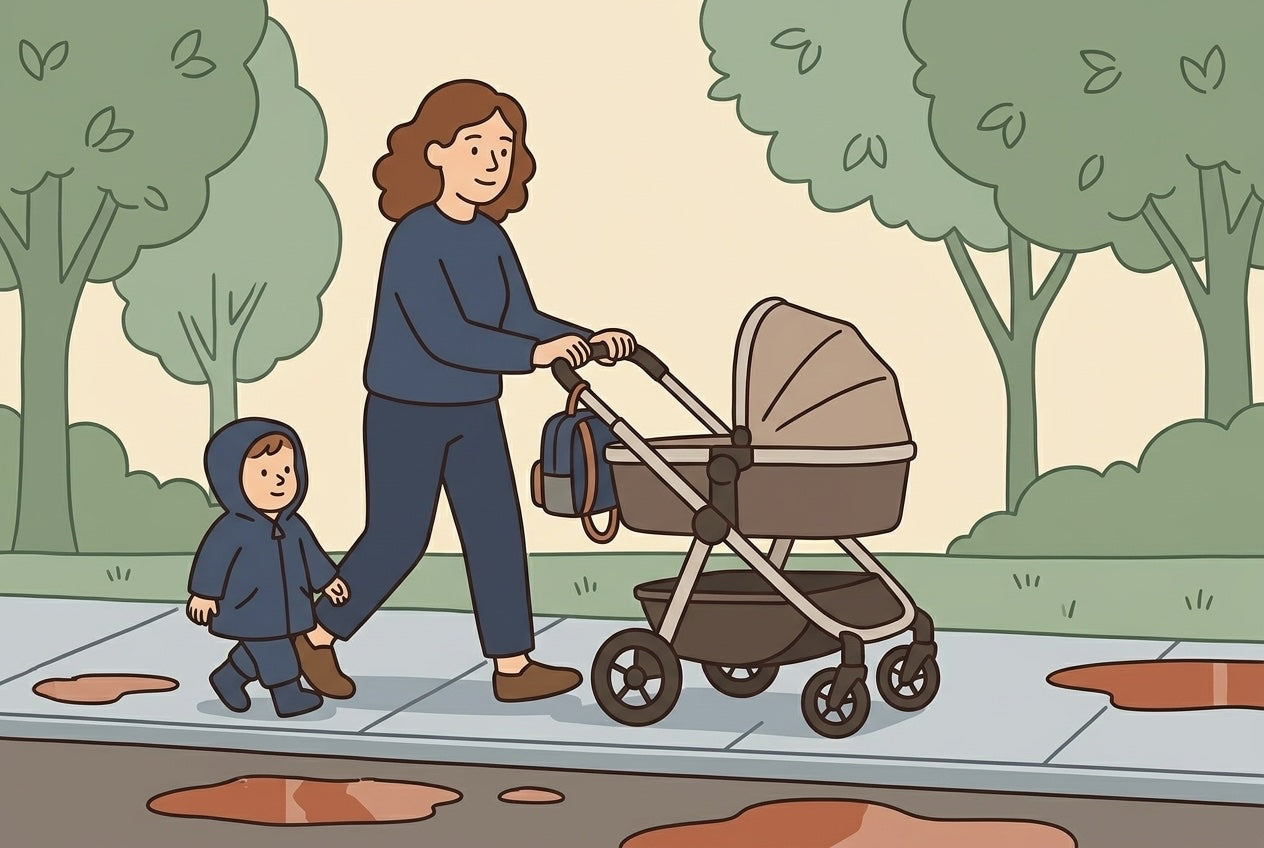
School runs are short. They're also some of the most stressful fifteen minutes of a parent's day — because they're on a schedule, there's no room for a meltdown halfway down the street, and your toddler has very strong feelings about walking today.
If your mornings look like cajoling, carrying, bribing, and arriving at the school gate slightly frantic, you're not doing it wrong. You're just doing it without a plan yet. Here are six fixes that actually work — tried by parents who do this every single day.
Key Takeaways
Leaving just five minutes earlier takes most of the pressure off.
A pre-walk snack and water can transform a reluctant toddler into a willing walker.
A hammock seat backup means tired little legs never derail your morning.
Scooters and balance bikes give toddlers a reason to move without being asked.
A calm wind-down when you get home helps reset everyone for the rest of the day.
The 6 fixes, in detail
None of these require a big purchase or a major lifestyle overhaul. Most of them cost nothing and take less than a week to feel normal.
1. Leave five minutes earlier
This one sounds obvious. It also works better than almost anything else on this list.
The reason school runs feel brutal is usually the clock. When you're running tight, every slow step from your toddler becomes a source of stress — and children pick up on that stress instantly. They slow down more. You get more stressed. It spirals.
Five extra minutes changes the whole dynamic. You can pause at the garden gate. You can let them look at a pigeon on the pavement. You can walk, not rush. The walk feels easier — and it is easier, because nobody is chasing a deadline quite so hard.
Set the alarm five minutes earlier tonight. That's the whole fix.
2. Pre-walk snack and water
Toddlers who are hungry or thirsty before a walk are a different species from toddlers who aren't. A small snack — a banana, a handful of crackers, a piece of toast — and a full water bottle before you leave the house can take a grumpy, foot-dragging child and turn them into someone who walks out the door on their own.
This works especially well if you make the snack part of the routine. Put it on the same corner of the kitchen counter every morning. Let them pick it out the night before. When the snack is expected, eating it doesn't require a battle, and leaving can happen while they're still in a good mood.
Keep a small water bottle already filled and ready by the door. Hydration is genuinely underrated as a fix for tired, difficult toddler mornings.
3. Hammock seat backup
This is the fix for parents who already have a stroller and a second child who sometimes — often — announces that their legs have completely stopped working about halfway to school.
A stroller hammock seat attaches to the rear of your existing stroller and gives your older child a place to sit when they run out of steam. You don't need to buy a double stroller. You don't need to replace anything. You just have a backup option for the mornings when walking isn't happening.
Hoppie is designed for children from around 18 months to 5 years old, up to 20 kg / 44 lbs. It adds a compact second seat at the back of most standard strollers with a stable rear frame. On the school run, it means your older child can start walking and hop on when they need to — without any drama, and without you arriving at the gate red-faced and carrying a 20 kg child on your hip.
Always follow Hoppie's installation instructions and check your stroller manufacturer's maximum load capacity before use. Always supervise your child while using Hoppie.

4. Scooter or balance bike
If your toddler resists walking but lights up the moment there are wheels involved, use that.
A scooter or balance bike gives children a reason to move fast rather than slow. The school run stops being a chore they're being asked to do and starts being something that's actually fun. Many parents who struggle with slow, reluctant walkers find that one scooter purchase changes their mornings completely.
A few things to keep in mind:
Keep the scooter by the door the night before so there's no hunt for it in the morning.
Helmet on before you leave — make it non-negotiable from day one so it's never a morning argument.
Have a plan for what happens when they get tired of the scooter halfway there. A hammock seat backup (see fix 3) or a hook on the stroller for the scooter works well.
The scooter doesn't fix every morning. But it fixes a lot of them.
5. Weather-prep the night before
Half the misery of school-run mornings is discovering at 8:25 that it's raining and you can't find anyone's waterproof. Or that your toddler's wellies are too small and their shoes are soaking through within a block.
Five minutes the night before removes all of this:
Check the weather app for tomorrow morning.
Put the rain cover on the stroller if there's any chance of rain — it takes thirty seconds and saves five minutes of morning fumbling.
Lay out coats, boots, and hats the night before. Let your toddler help choose their hat if it gets them more excited to put it on.
Keep a small spare umbrella in the stroller basket as a permanent fixture.
Cold and wet mornings slow everything down — a child who's uncomfortable will drag their feet even harder. Prep for the weather and the walk itself gets easier.
6. Wind-down at home
This one is about the return journey, not the drop-off. After the school gate, you often still have a tired toddler to get home — and if you've been in a hurry all morning, they've been in a hurry too.
A five-minute wind-down ritual when you get back through the door resets the mood for everyone. Something calm and predictable: a small snack, a short sit, a familiar story or song. It doesn't need to be long. It just needs to signal that the rushing is over.
Parents who build this in consistently find that their toddler's mood on the next school run is noticeably better. Sleep quality improves when mornings are calmer. The wind-down isn't a luxury — it's maintenance.
What to do when you're doing the school run solo
Everything above applies. But solo-parent school runs have an extra layer of difficulty that deserves its own honest look.

Solo-parent school runs
When there's only one adult, there's no fallback. If your toddler refuses to walk and you're also pushing a stroller with a younger child, you can't carry both. The stakes are higher, and the margin for a difficult morning is thinner.
Solo parents who've sorted their school run tend to have two things in common: a very predictable routine (so children know exactly what's coming and can't negotiate their way out of it) and a physical backup for the moment when walking stops.
The routine piece is about reducing decisions in the morning. The more that's already decided — same breakfast, same order of getting dressed, same route — the less energy goes into managing each step. Predictability is not boring for toddlers. It's reassuring.
The physical backup piece is where a hammock seat earns its place. When you're alone, you cannot carry a tired toddler and push a stroller at the same time. A second seat means your older child has somewhere to go when they hit the wall — and you can keep moving, calmly, without anyone being left behind or carried awkwardly.
Streamline the routine
A few small changes that make solo school runs noticeably smoother:
Pack the school bag the night before. Every single time. A missing reading book or forgotten PE kit at 8:20 undoes the whole morning.
Have a fixed leaving time, not a target time. "We leave at 8:30" works better than "we need to leave soon." Make it a fact of life, not a negotiation.
Keep the stroller by the door, ready to go. If the rain cover needs to go on, it's already there. If the hammock seat is on, it's already on. Fewer things to do in the morning means fewer things that go wrong.
Tell your toddler what's happening before it happens. "After breakfast, we put on shoes. After shoes, we go." Transitions are easier when children aren't surprised by them.
Lower your own expectations on hard days. Some mornings will still be difficult. Arriving slightly flustered is fine. Arriving is the goal.

The school run doesn't have to be the worst part of your day
Most school-run misery comes from the gap between what you expect (toddler walks nicely, everyone arrives happy) and what actually happens. Close that gap with a realistic plan and the right backup, and the whole morning shifts.
Hoppie is the school-run hack many parents discover too late — usually after a winter of carrying a tired four-year-old while pushing a stroller one-handed. A compact hammock seat at the back of your existing stroller means tired little legs always have somewhere to go. No double stroller. No drama.
Hoppie is designed for children from around 18 months to 5 years old, up to 20 kg / 44 lbs. Keep the stroller you love. Add a second seat when you need it.
FAQs
Why is my toddler always tired on the school run?
Toddlers have short legs and small energy reserves, and the school run usually happens right after they've just woken up and eaten breakfast. They're not being difficult — they're genuinely running on less than adults do. The timing is also against them: early morning is not when most young children are at their physical peak. A pre-walk snack, a slightly earlier start, and a backup for when they genuinely hit the wall all help more than trying to push through.
Should I carry my toddler to school?
You can, but it's not a sustainable plan — especially if you're also pushing a stroller or carrying a bag. A babywearing carrier works well for short distances and younger toddlers. For older or heavier children, a hammock seat on your stroller is a more practical option that doesn't put the load on your back. Either way, building in a physical backup so you're not caught without one is the key thing.
Is a stroller OK for a 4-year-old on the school run?
Absolutely. A four-year-old who walks most of the way but occasionally needs a ride is completely normal. Using your stroller as a backup — either in the main seat if your younger child isn't in it, or with a hammock seat add-on for your older child — is a practical, sensible solution. The goal is getting everyone there without a meltdown, not meeting a walking milestone on a schedule.
What's the fastest way to do the school run with two kids?
Prepare everything the night before — bags packed, clothes out, stroller ready at the door. Leave five minutes earlier than you think you need to. Have a physical backup for your older child so you're not stuck if they stop walking. And keep the morning routine as predictable as possible — fewer decisions means fewer delays. The fastest school runs aren't the ones where you rush. They're the ones where nothing goes unexpectedly wrong.
At what age do children get better at walking the school run without complaining?
It varies a lot by child, but most parents notice a genuine shift somewhere between four and six years old — once children have a stronger sense of time, routine, and the reward at the end (seeing friends at school). Until then, having realistic expectations and a practical backup plan makes the mornings much less stressful for everyone.
What do I do if my toddler refuses to get in the stroller?
Keep the mood calm and matter-of-fact. Avoid turning it into a negotiation or a battle of wills — once it's a conflict, you've already lost the easy path. Offering a small choice ("do you want to sit in front or on the back seat?") gives them a sense of control without actually letting them opt out entirely. If they're genuinely resistant, a familiar snack or a small distraction — something to hold, something to look at — often helps more than reasoning or persuading.
Disclaimer: Hoppie is an independent product and is not affiliated with, endorsed by, sponsored by, or approved by any stroller brand. Always follow Hoppie's installation instructions and check your stroller manufacturer's maximum load capacity before use. Hoppie is designed for children from around 18 months to 5 years old, up to 20 kg / 44 lbs. Always supervise your child while using Hoppie.


