

A stroller hammock seat that gets cleaned regularly, stored dry, and used within its weight limit can last years of daily family life. The three rules are simple: wash it gently, dry it fully before storing, and replace it the moment the straps or fabric show real wear. Everything else in this guide flows from those three things.
Key Takeaways
Hand-wash with mild soap and cool water — no machine washing, no tumble drying.
Always dry completely before folding or storing to prevent mildew and odour.
Store flat or loosely rolled in a breathable bag, away from heat and direct sunlight.
Check straps and seams monthly — fraying, stiffness, or discolouration are signs it's time to replace.
Hoppie is designed for children from around 18 months to 5 years old, up to 20 kg / 44 lbs — never exceed the limit.
How to clean your stroller hammock seat
Hammock seats live outside. Muddy shoes, spilled snacks, sunscreen, and the occasional rainstorm are all part of daily use. The good news is that cleaning one takes about five minutes if you do it regularly — and a lot longer if you don't.
Hand-wash steps
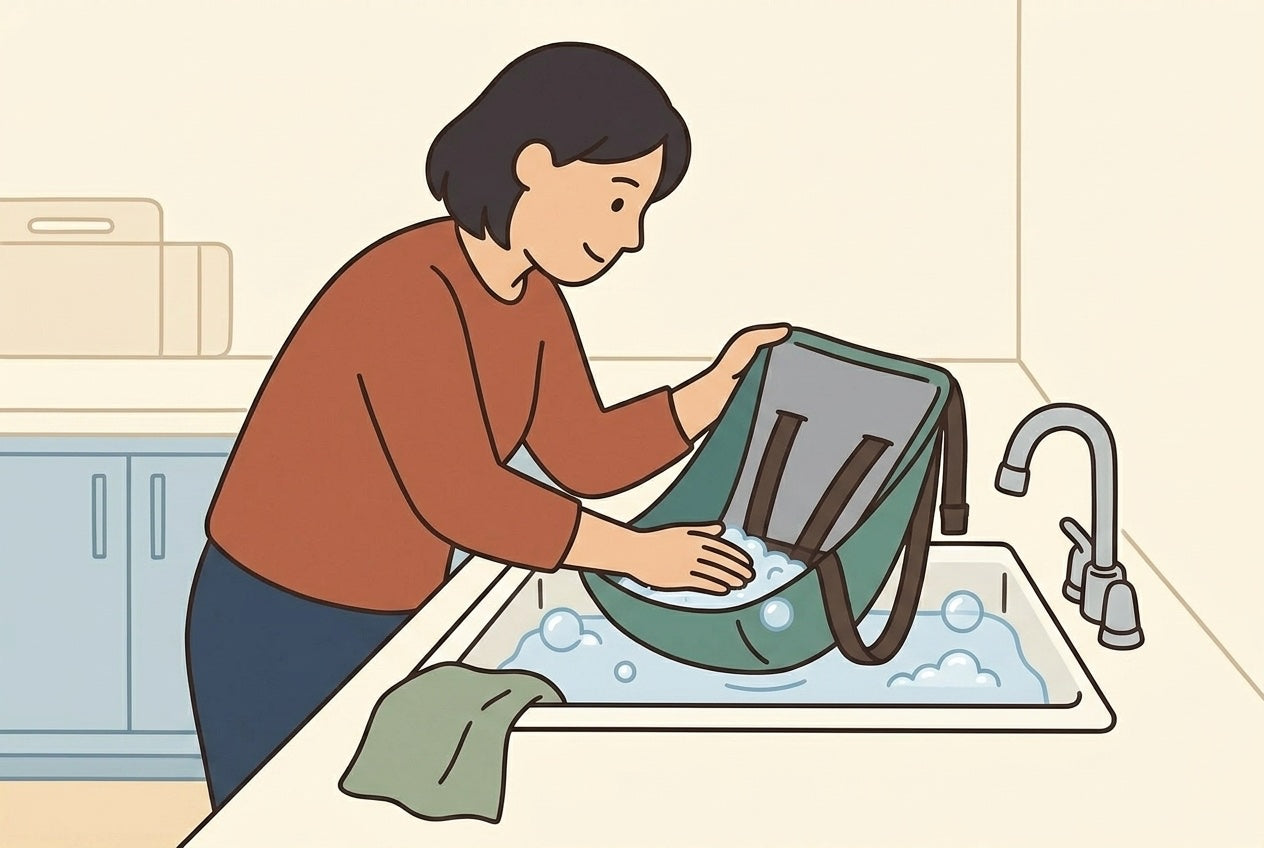
Hand-washing is the only recommended method. Machine washing puts stress on the webbing and strap loops — the kind of stress that shortens their lifespan without you being able to see the damage.
Here's how to do it:
Remove the hammock seat from the stroller and unclip all straps.
Fill a clean sink or basin with cool or lukewarm water. Hot water weakens synthetic fabrics and can cause colours to bleed.
Add a small amount of mild liquid soap — the kind you'd use for delicate fabrics or baby laundry. Avoid anything with bleach, enzymes, or optical brighteners.
Submerge the seat and gently work the fabric between your fingers. Pay attention to the areas around the strap loops, where dirt tends to build up in the fibres.
Rinse thoroughly with clean cool water until no soap residue remains. Soap left in the fabric can attract dirt faster and cause skin irritation for your child.
Gently press — don't wring or twist — to remove excess water.
A monthly wash is a sensible rhythm for regular users. Wash more often after beach trips, muddy walks, or any outing where you can see visible marks on the fabric.

Stain removal
Most stains on a hammock seat are food, mud, or sunscreen. All three respond well to a gentle pre-soak before the main wash.
For food stains, soak the affected area in cool water for ten minutes before washing. Warm water sets protein stains, so keep it cool until the stain lifts. For sunscreen marks, which tend to leave an oily residue, a small amount of washing-up liquid applied directly to the stain and worked in gently before soaking usually does the job.
Avoid stiff brushes, abrasive pads, or anything that scrubs the weave of the fabric aggressively. Abrasion is how fibres fray — it weakens the material faster than any stain will.
If a stain won't budge after two or three gentle attempts, leave it. A stubborn mark on the fabric doesn't affect safety or function. What matters is that the straps, loops, and seams remain intact.
Drying
This step matters more than most parents expect. A hammock seat stored while still damp — even slightly — will develop mildew. Mildew weakens fibres, creates an unpleasant smell that is very difficult to remove, and can irritate your child's skin.
After washing, lay the seat flat or hang it on a drying rack in a well-ventilated spot, out of direct sunlight. Direct sun bleaches colours and can make synthetic webbing brittle over time. Give it at least a few hours, and run your hand along the straps before storing — webbing holds moisture longer than the main fabric and should feel completely dry to the touch.
Choose another setup for a tumble dryer. The heat damages the fibres, shrinks the fabric, and can warp the strap loops out of shape. Air drying is the only safe method.
How to store your stroller hammock seat
Most parents find a natural rhythm between having the hammock seat on the stroller full-time and taking it off between uses. Either approach works — but storage matters most when the seat is coming off for days or weeks at a time.
Folding and short-term storage
For day-to-day storage between outings, the simplest approach is to fold the seat loosely and tuck it into the stroller basket or a pram bag. Don't compress it tightly or force it into a small space — tight folds put repeated stress on the same crease points in the fabric and straps, which is where splits start.
If you're folding the stroller itself, always remove the hammock seat first. Hoppie should be removed before folding the stroller. Leaving it attached during the fold is the most common cause of cosmetic wear to both the stroller frame and the seat's straps — and in some cases it can affect the strap loops if the frame closes against them under force.

Long-term storage
If your child has grown out of the seat or you're not using it for a season, a little care before putting it away will make a real difference when you come back to it — whether that's for a younger sibling or to pass it on.
Make sure the seat is completely clean and bone-dry before storing. Any moisture or food residue left in the fabric will cause mildew over weeks in a closed space.
Store it in a breathable fabric bag or pillowcase rather than a sealed plastic bag. Sealed plastic traps moisture and encourages mildew even on fabric that feels dry.
Keep it somewhere cool and dry — a wardrobe shelf or a drawer is ideal. Avoid garages, attics, or sheds where temperature swings and damp air can degrade the fibres.
Keep it away from direct sunlight, even in storage. UV exposure through a window fades the fabric and weakens synthetic fibres over time.
Don't store it compressed under heavy items. Leave it loosely folded so the fabric and straps aren't under constant pressure.
Before putting it back into service after a long storage period, run through the wear checks below before your child uses it again.
Travelling with a stroller hammock seat
The hammock seat is compact enough to pack flat in a carry-on bag or travel backpack — one of the reasons parents find it so useful for airport days and holidays. When packing for travel, roll it loosely around the straps rather than folding sharply, and keep it away from toiletries or sunscreen that could leak onto the fabric.
After a beach trip or a wet outdoor day, let the seat air out fully before packing it away, even if it looks dry. Salt air and chlorine can accelerate fabric wear if left in a closed bag for days at a time.
When to replace your stroller hammock seat
A well-cared-for hammock seat can last through years of daily family use. But no fabric product lasts forever, and knowing what to look for means you'll never have to guess whether it's still safe.
Signs of wear to check monthly
Build a quick check into your monthly wash routine. It takes less than two minutes and gives you an honest picture of where the seat stands.
Run your fingers slowly along each strap from end to end. You're looking for:
Fraying — any loose fibres on the edges of the webbing. Minor pilling on the flat face of the strap is normal wear; fraying on the edges is a warning sign.
Stiffness or brittleness — straps that feel hard or crinkle when bent have likely been weakened by UV exposure or chemical contact. Stiff webbing can crack under load.
Discolouration at load points — dark or greasy marks around strap loops or buckles where the hardware contacts the fabric. This can indicate that oils or dirt have worked their way into the weave and are breaking down the fibres.
Visible wear through the main fabric — thin patches, small tears, or any point where you can see light through fabric that should be opaque.
Hardware issues — buckles, clips, or loops that don't close cleanly, feel loose, or show visible cracking in the plastic.
Any one of these is a reason to stop using the seat and contact Hoppie support. There's no threshold of acceptable fraying — the moment you see it, the seat should come out of rotation.

Beyond visible wear, trust your instincts. If the seat feels different when you install it — if the straps don't pull taut the way they used to, or if something shifts under your child's weight — take it off and check. A correctly installed and intact hammock seat sits firm and doesn't shift during normal walking.
Remember: Hoppie is designed for children from around 18 months to 5 years old, up to 20 kg / 44 lbs. Consistently using the seat beyond the weight limit accelerates wear on every part of the product — fabric, straps, and hardware alike. If your child is close to the limit, check the seat more often.
Always follow Hoppie's installation instructions and check your stroller manufacturer's maximum load capacity before use. Always supervise your child while using Hoppie.
FAQs
Can I machine-wash a stroller hammock seat?
In many cases, Machine washing puts too much stress on the webbing, strap loops, and seams. The agitation and heat — even on a gentle cycle — can weaken the fibres in ways that aren't always visible but reduce the seat's strength over time. Hand-washing with mild soap in cool water is the safe method.
Can I put it in the tumble dryer?
In many cases, Tumble-dryer heat damages synthetic fabrics, can warp strap loops, and may cause the fabric to shrink. Always air-dry flat or on a rack, in a well-ventilated spot out of direct sunlight.
How often should I clean it?
A monthly wash works well for regular daily users. Wash sooner after trips to the beach, muddy parks, or any outing where you can see visible dirt on the fabric. Regular cleaning prevents stains from setting and keeps the fabric from degrading faster than it needs to.
How long does a stroller hammock seat last?
With regular cleaning, proper drying, correct storage, and use within the weight limit, a stroller hammock seat can last through years of daily family life. How long yours lasts depends more on how it's cared for than on how often it's used. Consistent care is the biggest factor.
How should I store it long-term?
Clean it thoroughly, dry it completely, then store it loosely in a breathable fabric bag in a cool, dry place away from sunlight. Avoid sealed plastic bags, garages, attics, and anywhere with temperature swings or damp air. Don't compress it under heavy items.
When should I replace the seat?
Replace it as soon as you see fraying on the strap edges, stiffness or brittleness in the webbing, visible wear through the main fabric, or any hardware that doesn't close cleanly. Don't look for a threshold — any of those signs means it's time. If you're unsure, contact Hoppie support with a photo and we'll help you assess it.
Does leaving the seat on the stroller in the rain damage it?
Occasional rain is fine — the fabric is designed to handle everyday outdoor conditions. The important thing is to let the seat dry properly after it gets wet rather than folding it away damp. If the seat is soaked, take it off, let it air-dry fully, and check the straps before the next use.
Can I use any cleaning product on it?
Stick to mild liquid soap — the kind used for delicate fabrics or baby laundry. Avoid bleach, enzyme-based detergents, optical brighteners, and harsh stain removers. These can degrade the fibres and leave residues that irritate your child's skin.
A little care goes a long way
You don't need a complicated routine. Wash it gently once a month, dry it fully before putting it away, check the straps when you wash it, and store it somewhere cool and dry. That's it.
Hoppie's care guide is included with every order, so you'll have everything you need from the moment it arrives. Hoppie is for parents who love their stroller and want a smart second seat that lasts — for children from around 18 months to 5 years old, up to 20 kg / 44 lbs.
Keep the stroller you love. Add a second seat when you need it.
Disclaimer: Hoppie is an independent product and is not affiliated with, endorsed by, sponsored by, or approved by any stroller brand. Always follow Hoppie's installation instructions and check your stroller manufacturer's maximum load capacity before use. Hoppie should only be used with strollers that have a stable rear frame and enough rear clearance. Always supervise your child while using Hoppie.


