

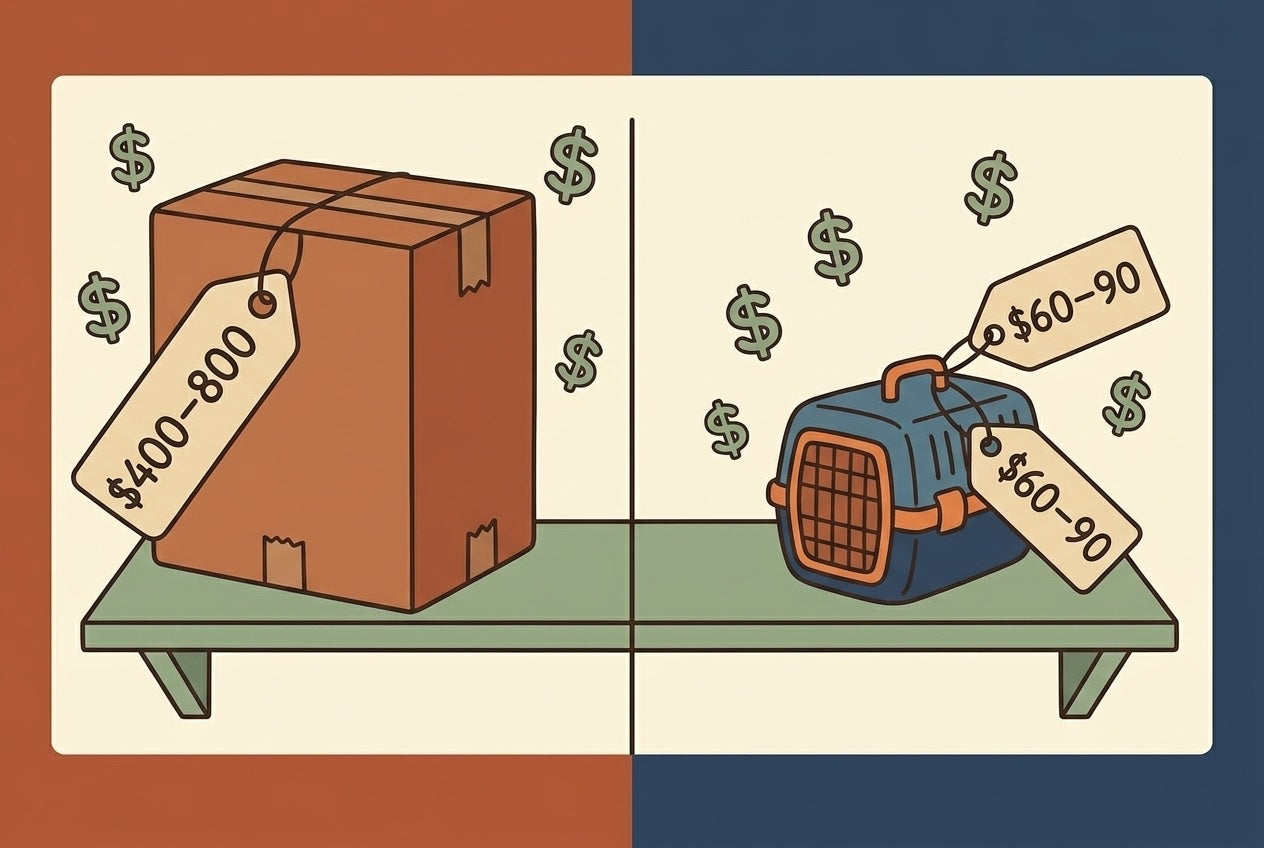
A double stroller can cost anywhere from $400 to $800 or more. A stroller hammock seat typically costs $60–90. That gap — five to ten times the price — is the whole story for most parents. But the direct price difference is only part of what you actually save. There are four more costs that most parents don't think about until they're already lugging a double stroller up a flight of stairs.
Key Takeaways
A double stroller typically costs $400–800+. A stroller hammock seat typically costs $60–90.
The gap is hundreds of dollars — money that goes back into your family's pocket.
Beyond the sticker price, double strollers carry hidden costs: transport, storage, effort, and resale loss.
A hammock seat keeps your existing stroller — the one you already love — and simply adds a second seat when you need it.
Hoppie is designed for children from around 18 months to 5 years old, up to 20 kg / 44 lbs.
The direct cost gap: $400 to $800 vs $60 to $90
When parents start shopping for a way to handle two kids on a walk, the double stroller is usually the first thing that comes up. It makes sense — it's the obvious answer. But the price tag is a real conversation-stopper.
What double strollers actually cost
Entry-level double strollers — the side-by-side or tandem models at the bottom of the range — typically start around $300–400. Mid-range models sit between $500 and $700. Premium double strollers push past $800 and well into four figures.
That's not a minor purchase. For most families, it's a deliberate budget line, planned weeks or months in advance.
A stroller hammock seat like Hoppie sits in a completely different price tier: $60–90, ordered online, delivered to your door.
What the gap actually buys you
The difference between $70 and $600 is $530. That's a real number. Here's what $530 looks like in family life:
A month of groceries for a family of four
A family weekend trip, flights included if you book early
Several weeks of after-school activities for your older child
A quality double bed for when the toddler transitions out of a cot
None of those things are luxuries when you have two young kids. The $530 that stays in your account is money that works somewhere else in your family's life.
And the gap only grows when you factor in that most parents use a double stroller for a relatively short window — often one to two years before both children are old enough to walk most of the time. A hammock seat covers the same window, for a fraction of the cost.

The 4 hidden costs you also skip
The sticker price is just the beginning. Parents who have owned a double stroller — and then switched to a simpler setup — often say the hidden costs were the real surprise.
Transport and boot space
Double strollers are big. A side-by-side model is often too wide to fit through a standard café door, and many don't fold into a car boot without folding the rear seats down first. That limits which car you can use, which trips you can make, and how spontaneous your days can be.
Some families end up buying a roof box or a larger car to accommodate the double stroller. Others just stop making certain trips because loading and unloading is too much effort. Neither of those is free.
A hammock seat folds flat. It weighs almost nothing. It fits in a tote bag. The stroller you already own folds the same way it always did. Nothing about your transport routine needs to change.
Home storage
A double stroller is a big piece of furniture, even when folded. Most families end up giving it the hallway, a chunk of the garage, or a corner of the living room. In a flat or smaller home, that footprint is genuinely noticeable.
There's also the guilt of a large purchase sitting underused. Double strollers often get heavy use for a year or two, then sit in a corner waiting for a car boot sale. That storage time — and the clutter it creates — has a real cost in terms of space and mental load.
A hammock seat hangs on a hook or folds into a drawer. When you don't need it, it disappears.
Everyday effort
Double strollers are heavier than single strollers. That means more effort to push, more effort to lift onto kerbs, more effort to fold and unfold, and more effort to carry up stairs when the lift is out of service.
Over weeks and months, that extra effort adds up. Parents who've made the switch often describe the difference not in big moments but in small ones — the kerb that didn't take three attempts, the bus door they made on time, the café they could actually get into.
A hammock seat adds minimal weight to your existing stroller. Your stroller stays as light and manoeuvrable as the day you bought it.
Resale loss
Baby gear depreciates fast. A double stroller bought for $600 might sell for $150–200 on the second-hand market, depending on condition and how popular the model is. That's $400 gone. And that's if everything is clean, the frame is scratch-free, and the right buyer finds your listing.
Hammock seats hold their value better — partly because they're compact and ship easily, and partly because the price point makes second-hand buyers more willing to pay a fair price. But even if you factor in no resale value at all, you've still spent $60–90 on something that served your family for a year or two. That's a reasonable deal.

Keeping the stroller you already love
There's one more cost to switching to a double stroller that doesn't show up in any price comparison: giving up the stroller you already own and like.
Most parents with a baby or toddler in the main seat have already chosen their stroller carefully. It folds the right way. It fits in their car. It rolls well on the pavements near their home. Their baby knows it. It's part of their daily routine.
Switching to a double stroller means starting that process again — new fold mechanism, new dimensions, new behaviour on kerbs and slopes. It's a bigger change than it sounds, and it's one you're making right at the moment when your family life is already adjusting to a new child or a growing toddler.
A hammock seat skips all of that. You keep the stroller you chose. You add a second seat when you need it, and remove it when you don't. School runs, weekend walks, airport days — the stroller handles them the same way it always did, just with an extra seat at the back for a tired pair of little legs.
Hoppie is designed for children from around 18 months to 5 years old, up to 20 kg / 44 lbs. It attaches to the rear of most standard strollers with a stable rear frame — no tools, no new stroller, no fuss.
Always follow Hoppie's installation instructions and check your stroller manufacturer's maximum load capacity before use. Always supervise your child while using Hoppie.

Is a hammock seat right for your family?
A stroller hammock seat is not a perfect solution for every family. It works best when:
Your older child is between around 18 months and 5 years old, and under 20 kg / 44 lbs
Your existing stroller has a stable, rigid rear frame
Your older child can mostly walk but tires quickly on longer outings
You want a solution that packs away when you don't need it
If your older child is very young and needs the main seat for long stretches, or if both children need to be seated simultaneously for extended periods every day, a double stroller may still be the right call for your specific situation. But for a large number of families — especially those with a walking toddler who just needs a rest now and then — a hammock seat does the job for a fraction of the price.
If you're unsure whether your stroller is compatible, send us a photo and we'll help you check.
FAQ
How much does a stroller hammock seat cost?
A stroller hammock seat typically costs between $60 and $90, depending on the brand and any extras included. Hoppie sits in this range. It's a one-time purchase with no ongoing costs.
How much does a double stroller cost on average?
Double strollers vary widely. Entry-level models start around $300–400. Mid-range models sit between $500 and $700. Premium double strollers can cost $800 or more. The total investment, once you factor in accessories and potential transport changes, is often higher than the sticker price suggests.
What hidden costs come with a double stroller?
The four biggest hidden costs are: transport (larger car, roof box, or restricted trips), home storage (hallway or garage space), everyday effort (heavier pushing and lifting), and resale loss (double strollers depreciate significantly). None of these show up on the product page, but parents feel all of them over time.
Can I really save hundreds by choosing a hammock seat?
Yes — in most cases. The direct price difference between a hammock seat ($60–90) and a mid-range double stroller ($500–700) is often $400–600. Add in the hidden costs above and the gap widens further. For families whose older child mostly walks and just needs occasional rest on the stroller, that saving is very real.
Does a stroller hammock seat work as well as a double stroller?
It depends on how you use it. A hammock seat is designed for a child who can mostly walk but tires quickly — not for all-day seated use. If both children need to sit for long stretches every day, a double stroller may suit your routine better. But for school runs, shopping trips, and family days out, a hammock seat handles the job well for most families.
What age and weight is Hoppie designed for?
Hoppie is designed for children from around 18 months to 5 years old, up to 20 kg / 44 lbs. Always check your stroller's total load capacity in addition to Hoppie's own weight limit before use.
Will I have to buy a new stroller?
In many cases, That's the whole point. Hoppie is designed to work with the stroller you already own — as long as it has a stable, rigid rear frame and enough rear clearance. You keep your stroller, your fold routine, your car setup, and your boot space.
What if I'm not sure my stroller is compatible with a hammock seat?
Send us a photo of your stroller from the side and from the rear. We'll help you check whether Hoppie is likely to be a good fit. It's the fastest way to know for sure before you order.
Keep the stroller you love. Skip the double stroller bill.
Hoppie typically costs $60–90 — compared with $400–800 or more for a new double stroller. The savings are real, the hidden costs you skip are real, and the stroller you already love stays exactly as it is.
Hoppie is for parents who need a smart second seat without the double stroller price tag — for children from around 18 months to 5 years old, up to 20 kg / 44 lbs.
Disclaimer: Hoppie is an independent product and is not affiliated with, endorsed by, sponsored by, or approved by any stroller brand. Always follow Hoppie's installation instructions and check your stroller manufacturer's maximum load capacity before use. Hoppie should only be used with strollers that have a stable rear frame and enough rear clearance. Always supervise your child while using Hoppie.


