

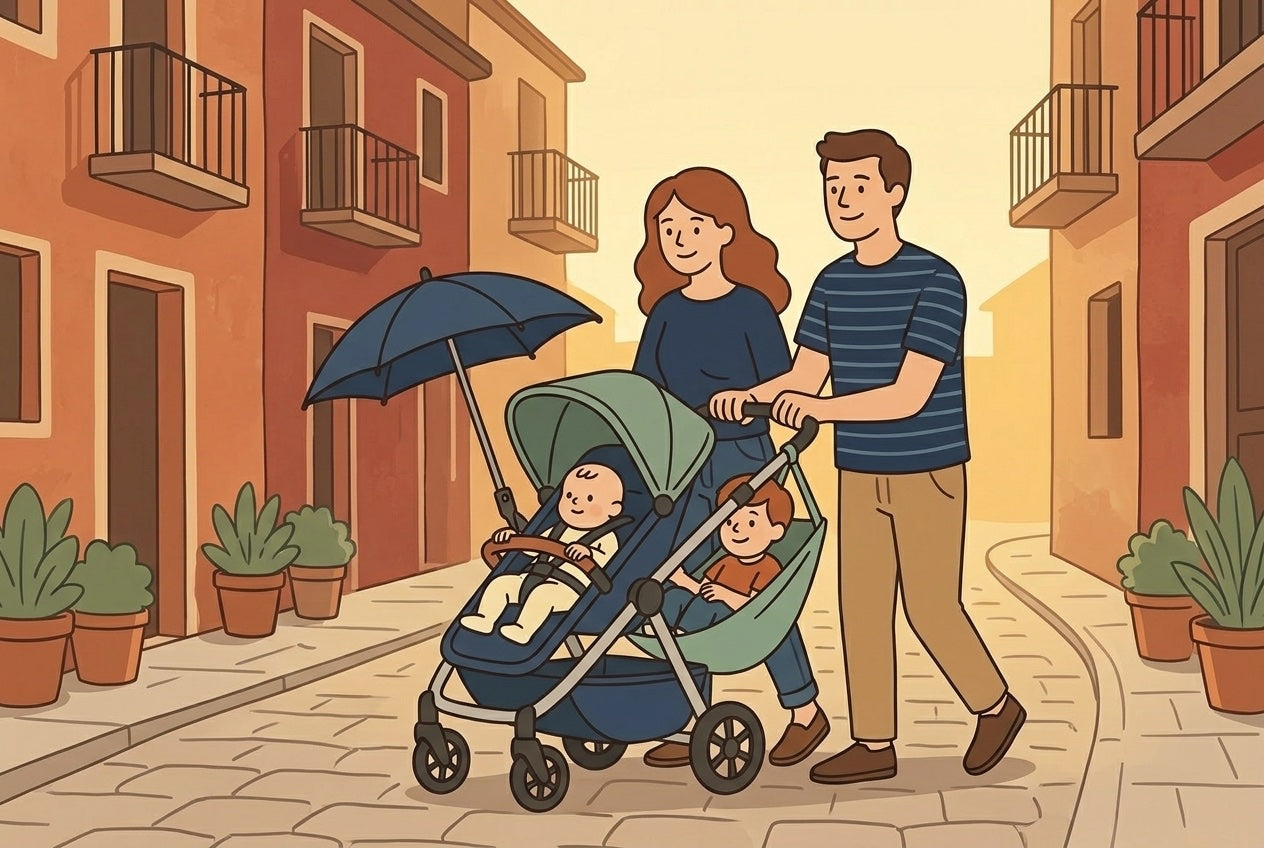
Holidays are supposed to be fun. But the moment you start walking more than usual — cobblestone streets, market squares, long promenades — your toddler hits a wall. Fast. And suddenly the beautiful day out becomes a negotiation about who carries who, and whether the ice cream was really worth it.
The good news: tired toddlers on holiday are a completely solvable problem. You just need a few smart fixes in place before the meltdown starts.
Key Takeaways
Toddlers tire much faster than adults on holiday walks — planning shorter sessions makes the whole day go better.
Snacks, hydration, and shade are the three easiest wins you can prepare in advance.
A hammock seat gives your toddler a place to rest without ending the outing early.
Daily downtime built into the schedule prevents the kind of exhaustion that ruins whole days.
Knowing when to cut a day short is just as important as knowing how to push through.
Why holiday walks hit toddlers harder
At home, your toddler walks to the park and back. On holiday, you walk to the old town, through the market, across the beach, up to the viewpoint, and back again — before lunch. Adults adjust their pace when they're excited. Toddlers don't have that filter. They run ahead, stop to examine every pebble, and then crash completely, usually at the worst possible moment.
Heat, unfamiliar surroundings, disrupted nap schedules, and a full sensory use outside the intended setup all pile on top of the physical tiredness. It's not that your child is being difficult. Their little body is genuinely overwhelmed.
Here are six fixes that actually work.
The 6 fixes for long holiday walks with a toddler
1. Snacks and hydration
This sounds obvious, but the timing matters more than most parents expect. Waiting until your toddler says they're hungry on a walk is waiting too long. By the time they say it, blood sugar has already dropped and the mood has gone with it.
Bring more snacks than you think you need, and offer them proactively — roughly every 45 minutes on longer outings. Easy-to-carry options like raisins, soft crackers, banana pieces, or cheese cubes work well in warm weather. Avoid anything too sweet that gives a short spike and then a harder crash.
Hydration is just as important. Toddlers dehydrate faster than adults, especially in heat. Keep a sippy cup or water bottle within easy reach and encourage sips before they ask. If your toddler resists plain water on holiday, adding a slice of cucumber or a small splash of fruit juice can help.
2. Shade and weather
Heat is the fastest way to drain a toddler. If you're visiting somewhere sunny, plan the biggest walks for the morning — ideally before 11am — and again in the late afternoon after 4pm. The middle of the day is for rest, pools, or shaded cafés.
When you're out, actively chase the shade. Cross the street to walk on the shaded side. Use a stroller with a canopy. Pack a light sun hat and make it non-negotiable. A cool wet cloth in a small bag takes up almost no space and can completely reset a hot, frustrated toddler.
On cooler or cloudy days, the same principle applies in reverse — wind and cold tire toddlers quickly too. A light layer and a wind-protected spot for snack breaks makes a big difference.
3. A hammock seat backup
This is the fix that changes everything on longer days. When your toddler runs out of steam — and they will — having a place for them to sit on the back of the stroller means you don't have to stop, turn back, or carry them.
Hoppie is a compact hammock seat that attaches to the back of your existing stroller. Your younger child stays in the main seat. Your older toddler hops on the back when their legs give out. The walk continues. The outing is saved.
Hoppie is designed for children from around 18 months to 5 years old, up to 20 kg / 44 lbs. It's compact enough to pack in your holiday luggage, and it doesn't change how wide or heavy the stroller feels when you're navigating busy streets or tight café doorways.
It's the holiday hack that turns "too long" into "just right."

4. Shorter sessions with clear endpoints
Toddlers manage distance much better when they know what's coming next. "We're walking to the fountain and then we'll stop for a drink" lands better than "we're going to the old town." Give them a visible or understandable landmark to aim for, and make sure there's a real rest or reward waiting when they get there.
Breaking a two-hour walk into four 30-minute legs with proper pauses is almost always more enjoyable than pushing straight through. Adults often underestimate how restorative a 10-minute sit-down is for a toddler. Ten minutes of sitting, drinking, and watching the world go by can genuinely reload their energy for the next stretch.
5. Build daily downtime into the plan
Holiday fatigue is cumulative. A toddler who copes brilliantly on day one may fall apart on day three if they haven't had enough rest. Trying to see everything every day is the quickest route to tears — for them and for you.
Schedule at least one proper rest period every day. Not just a café stop — actual horizontal time. A nap, a quiet hour at the accommodation, time to play in the shade without walking anywhere. This isn't wasted holiday time. It's what makes the rest of the holiday work.
6. Pack light, carry smart
The heavier your toddler's bag, the less they want to walk. If they're carrying a backpack, keep it light — a water bottle, one toy, and a snack. Better still, distribute everything between your bag and the stroller basket so your toddler is as free and unburdened as possible.
Comfortable shoes are worth saying out loud: holiday sandals that look adorable in the photos often don't provide enough support for a full day of walking. Pack at least one pair of proper, supportive shoes and use them on the long walking days.
When to rethink the day plan
Even with all six fixes in place, some days just don't go to plan. Knowing when to adapt — and doing it without guilt — is what separates a stressful holiday from a good one.

Heat warnings
If the temperature is over 30°C / 86°F and you're planning a long outdoor walk, reconsider. Heat exhaustion in toddlers can escalate quickly, and the signs — flushed face, unusual quietness, clinginess — are easy to miss when you're distracted by a beautiful destination.
On high-heat days, move plans indoors: museums, galleries, shaded markets, or simply a long slow lunch somewhere with air conditioning. These can become some of the best memories of the trip.
When kids hit a wall
You'll know when your toddler hits a real wall — it's different from the everyday tired-and-whingy. Arms reaching up. Lying down on the pavement. Crying at nothing. That's not a child being dramatic. That's a body saying it's done.
At that point, the right call is always to stop. Head back to the accommodation, get horizontal, and give them quiet time. Whatever you were going to see next will be there tomorrow, or on another trip. A child who's been pushed past their limit takes a full day to recover — and that lost day costs far more than a shortened afternoon.
A hammock seat can often delay this point significantly — if your toddler can rest on the back of the stroller for 20 minutes while you keep walking, they often revive enough to walk again independently afterwards. But when the wall is total, rest is the only answer.
Disrupted sleep and off days
Holidays disrupt routines, and disrupted routines affect sleep, which affects everything else. If your toddler had a rough night, scale back the next day's plans proactively rather than waiting for the inevitable crash. A gentle morning, a good nap, and an easy afternoon often sets them up better for the rest of the trip than grinding through a full day tired.

Hoppie on holiday: what parents actually say
Parents who bring Hoppie on holiday consistently mention the same thing: it's not just about carrying the toddler. It's about confidence. Knowing that when tired little legs give out, there's a plan B that doesn't mean turning back or carrying a 15 kg child through an airport.
It also means the younger child stays safely in the main stroller seat — not jostled out to make room — while the older one gets a break. No juggling. No drama. Everyone keeps moving.
Hoppie is designed to fit most standard strollers with a rigid rear frame. If you're unsure whether your stroller is a good match, send us a photo and we'll help you check before your trip.
Always follow Hoppie's installation instructions and check your stroller manufacturer's maximum load capacity before use. Always supervise your child while using Hoppie.
FAQs
How long can a toddler walk on holiday?
It depends on age and the conditions. A two-year-old may manage 20–30 minutes of continuous walking before needing a break. A four-year-old can often manage 45–60 minutes with the right pacing and regular snack stops. Heat, excitement, and disrupted sleep all reduce these times significantly. Building in rest breaks every 30–45 minutes is a reliable way to extend the total distance your toddler can cover in a day.
Should I bring a stroller on vacation?
For most families with children under five, yes. Even if your toddler is a confident walker at home, holidays involve more distance, more heat, and more stimulation than a normal day. A stroller gives you a fallback for tired moments and keeps the day moving when legs give out. A compact stroller with a hammock seat attachment is a practical option for families with two young children — the younger child rides in the main seat and the older one has a backup perch when needed.
How do I keep a tired toddler happy on a city break?
Pace, snacks, and a backup plan. Break the day into short walking sessions with clear stopping points. Keep snacks and water within easy reach and offer them before your toddler asks. Have a plan for when legs give out — whether that's a stroller seat, a café stop, or heading back to the accommodation. Toddlers do much better on city breaks when the adults adapt the plan to the child's rhythm rather than expecting the child to match the adult's pace.
When should I cut a day short with kids?
When a toddler is lying on the ground, reaching to be carried, or crying at nothing, the day is done. Pushing past that point leads to full meltdowns that take much longer to recover from than a shortened afternoon does. Trust your instincts — if your child looks genuinely depleted rather than just momentarily frustrated, heading back is always the right call. A rested child will have a better day tomorrow. An overtired one won't.
At what age can kids walk further on holiday?
There's no fixed age, but walking stamina typically increases significantly between ages four and six. By the time children are in school, most can manage longer outings with good pacing and breaks. Until then, treat every long walk as an expedition that needs a plan — snacks, shade, a backup seat, and the willingness to adapt if things go sideways.
Is Hoppie suitable for holiday travel?
Yes. Hoppie is compact and lightweight enough to pack in holiday luggage. It attaches to most standard strollers with a stable rear frame and is designed for children from around 18 months to 5 years old, up to 20 kg / 44 lbs. It's particularly useful on holiday because long walking days are exactly when toddler stamina runs out fastest. If you're unsure whether your stroller is compatible, send us a photo of the rear frame before your trip and we'll help you check.
Make holiday walks work for everyone
You don't have to choose between seeing what you came to see and keeping your toddler comfortable. With the right pace, the right snacks, enough shade, and a smart backup for tired legs, long holiday walks can actually be enjoyable — for the whole family.
Hoppie gives your toddler a place to rest without ending the day. Keep the stroller you already have. Add a second seat when you need it.
Disclaimer: Hoppie is an independent product and is not affiliated with, endorsed by, sponsored by, or approved by any stroller brand. Always follow Hoppie's installation instructions and check your stroller manufacturer's maximum load capacity before use. Hoppie is designed for children from around 18 months to 5 years old, up to 20 kg / 44 lbs. Always supervise your child while using Hoppie.


