

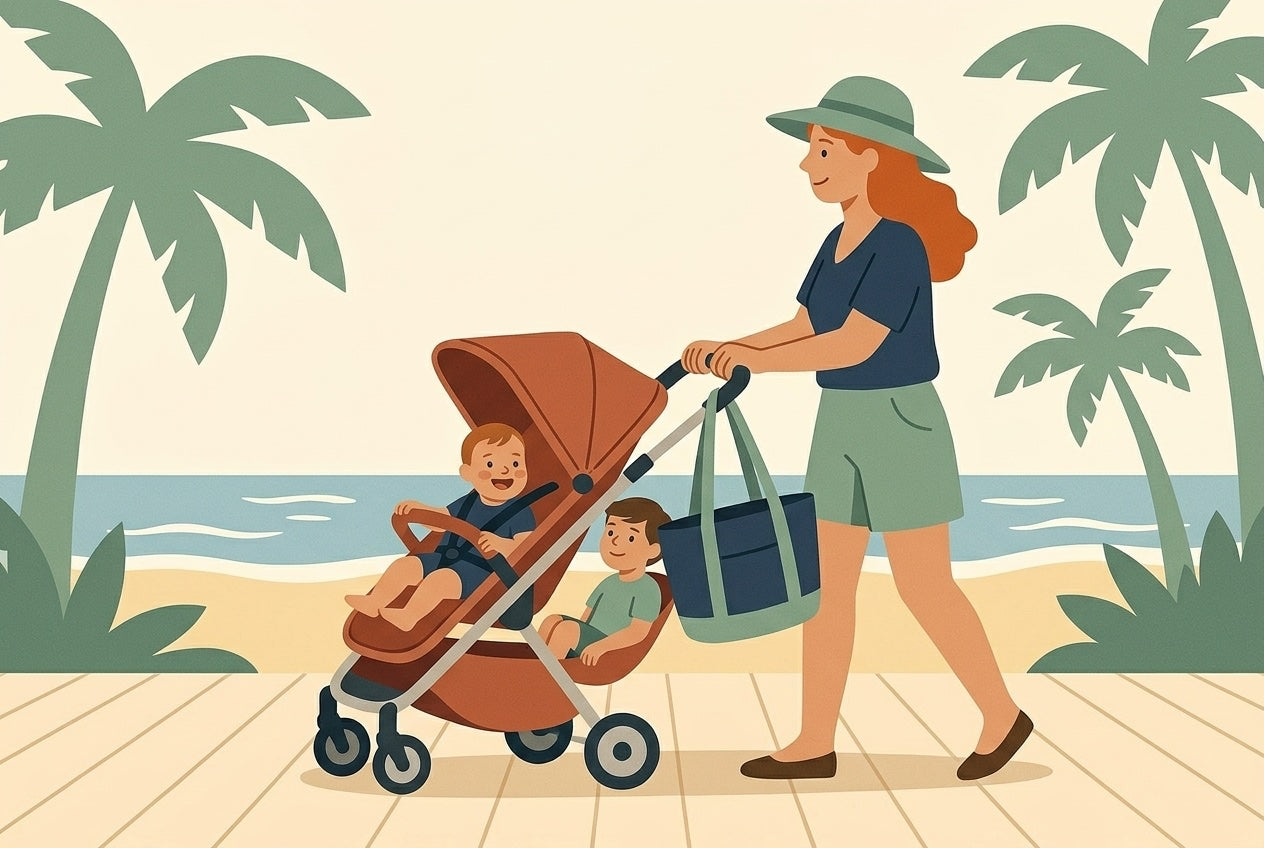
Beach days are supposed to be fun. But with two young kids, the packing list alone is enough to make you want to stay home. Sunscreen, towels, snacks, water, sand toys, spare clothes, a beach umbrella — and then somehow you still need your hands free. The good news: one stroller and a hammock seat can carry the whole operation. Here's exactly how to do it.
Key Takeaways
A single stroller with a rear hammock seat is lighter, narrower, and easier to navigate on sandy paths than a double stroller.
The under-seat basket is your main storage — pack it smart before you leave home.
A clip-on parasol or UV canopy extension keeps your older child's rear seat shaded.
Rinse stroller wheels and wipe down the frame after each beach day to stop sand grinding into moving parts.
Hoppie is designed for children from around 18 months to 5 years old, up to 20 kg / 44 lbs.
Pack list for the beach with two kids
Before you even think about loading up the stroller, write down everything you plan to bring. Beach outings with two young children have a habit of expanding. The trick is deciding what stays home before you leave the apartment — not while you're standing in the car park with sand in your shoes wondering how to close the boot.
Here's the realistic list that fits a single stroller setup:
Stroller setup
The stroller does double duty at the beach: it's transport for tired legs, and it's your rolling storage unit. The hammock seat for your older child hangs at the rear, which leaves the main seat free for your younger one — and crucially, leaves the under-seat basket completely accessible.
Main seat: younger child, reclined if needed for naps on the way home
Hammock seat: older child, used when they're tired or when the path is long
Under-seat basket: rolled towels, dry bag, sun umbrella, snack bag
Crossbody bag or backpack: sunscreen, water bottles, your phone, keys, the wet bag — while Hoppie is in use, keep the handlebar and rear frame clear and don't hang bags from them
One thing to remember: the stroller's total weight capacity includes every child, every bag, and every towel. Check the maximum load in your stroller's manual and make sure your packed setup stays under it. Always follow Hoppie's installation instructions and check your stroller manufacturer's maximum load capacity before use.
Beach gear
The stuff that tends to take up the most space — beach umbrella, towels, pop-up tent — is also the stuff that can usually be left behind or shared with another family if you're going with friends. Keep the list tight:
Two compact microfibre towels (they roll small and dry fast)
A small pop-up shade tent or clip-on beach umbrella if the beach has no natural shade
UV-protective swimwear for both kids (reduces the sunscreen battle)
Two or three small sand toys — a bucket, a spade, a mould
A waterproof dry bag for phones, cards, and anything that can't get wet
A change of clothes per child — roll them tight and tuck them in the bottom of the basket
Skipping the bulky beach trolley means the stroller handles everything in one trip from the car. That one trip matters when you're also managing two young children across a car park in the heat.
Snacks and water
Bring more water than you think you need. Kids drink fast at the beach, and dehydration makes everything harder — for them and for you. The AAP and NHS both recommend that young children drink water regularly throughout any outdoor activity in the sun, especially in warm weather.
At least one 500 ml water bottle per person — insulated ones stay cool longer
Snacks that don't melt or go soggy: rice cakes, crackers, fruit pouches, dried fruit
A small insulated pouch if you're bringing anything that needs to stay cold
Wipes — always more wipes than you think you need
Pack snacks in a zip bag that sits on top of everything in the basket. Easy access means you're not unpacking the whole stroller every time someone says "I'm hungry."

Sand, sun, and stroller care
Sand is the enemy of every stroller. It gets into wheels, into joints, into fabric — and over time, it grinds things down. The beach is absolutely worth going to, but a few simple habits after each visit will keep your stroller rolling smoothly all summer.
Keeping sand out of moving parts
You're not going to stop sand getting on the stroller — that's part of the deal. What you can do is stop it from staying there.
Rinse the wheels with fresh water as soon as you're back at the car park or at the beach shower. Most coastal spots have outdoor rinse stations — use them.
Wipe down the frame with a damp cloth when you get home. Pay attention to the joints and pivot points around the fold mechanism.
Shake out the seat fabric before you fold. Sand that sits in the fold crease grinds the fabric every time you open and close it.
Remove and rinse the hammock seat separately. The fabric is easy to hand-wash. Hang it to dry in the shade — UV and heat can fade fabric over time.
Check the straps on the hammock seat after each beach visit. Sand can get into the buckle mechanism and make it stiffer. A quick rinse and dry keeps them snapping cleanly.
Sticking to firmer, packed sand or boardwalk paths where possible also helps. Pushing a loaded stroller through deep, loose sand is hard work and puts extra stress on the frame and wheels. Most beaches have a firm strip near the water line — that's your route.
Hoppie should only be used with strollers that have a stable rear frame and enough rear clearance. Always supervise your child while using Hoppie.

Sun shading the rear seat
The main stroller canopy covers your younger child in the front seat. Your older child in the hammock seat is sitting behind the stroller — which means they're often in the open sun, especially in the late morning or early afternoon when the angle is high.
A few options that actually work:
Clip-on parasol or UPF umbrella: these attach to the handlebar and can be angled to cover the rear seat. Lightweight and easy to pack flat. The most practical solution for most families.
UV swim hat with a wide brim: simple, reliable, and always with you. Pair it with UV-protective clothing and the sun exposure problem is mostly solved before you even get to the stroller.
Walk during lower-UV hours: early morning or late afternoon beach walks mean lower UV levels. Many families with young children find the morning beach run is the best part of a holiday anyway — cool, quiet, and less crowded.
Apply sunscreen before going out: this one sounds obvious, but the chaos of leaving the apartment often means it gets skipped. Apply it at home before you load up the stroller, not on the beach.
NHS and AAP guidance both recommend keeping young children out of direct strong sun, especially between 11am and 3pm in summer. Shade, clothing, and sunscreen are the main tools — the stroller setup is one more layer, not a replacement for the basics.

Why one stroller beats a double at the beach
Anyone who's tried to push a double stroller across a car park, down a boardwalk, and through a beach-side café knows the problem. Double strollers are wide. They're heavy. They're hard to park. And at the beach, where paths are often narrow or sandy, they become genuinely awkward.
A single stroller with a rear hammock seat keeps your setup compact. The total width stays the same as your original stroller, which means:
Narrow boardwalk gates and beach access paths are no problem
Café and restaurant aisles that wouldn't fit a double are easy
Packing into the car boot is the same as before
You're not paying to rent or transport a second stroller
The hammock seat is also a practical solution for the reality of beach days: your older child doesn't need to ride the whole time. They'll walk for stretches, play on the sand, paddle in the water — and then, when tired little legs have had enough and the walk back is longer than expected, the seat is right there.
Hoppie is designed for children from around 18 months to 5 years old, up to 20 kg / 44 lbs. If you're unsure whether your stroller is compatible, tell us the exact brand and model and we'll confirm whether Hoppie fits.
FAQs
Is a hammock seat OK to use at the beach?
Yes, as long as your stroller has a stable rigid rear frame and you stay on firm surfaces like boardwalks or packed sand near the water's edge. Hoppie is designed for everyday use including travel and holiday outings. Avoid pushing through deep, loose sand — it's hard on all stroller wheels and frames, not just the hammock seat. Always supervise your child while using Hoppie.
How do I keep sand off my stroller?
Rinse the wheels with fresh water at the beach shower or when you get back to the car. Wipe down the frame and joints with a damp cloth at home. Unclip the hammock seat and hand-wash it with mild soap, never in the machine — it dries quickly in the shade. Check buckles and straps after each beach visit and rinse if they feel gritty.
Can I shade a hammock seat from the sun?
Yes. The most practical option is a clip-on parasol or UPF umbrella that attaches to the stroller handlebar and can be angled toward the rear seat. A wide-brim UV hat on your child is also effective and costs nothing extra. For longer beach days, try to walk during lower-UV hours — early morning or late afternoon — when sun intensity is reduced.
What's the best stroller for sandy paths?
Strollers with larger, air-filled wheels handle sandy terrain much more comfortably than small hard wheels. A rigid metal frame is also important — both for general performance on uneven surfaces and for safely supporting a rear hammock seat. If your stroller has small plastic wheels and a lightweight fabric-back frame, stick to firm paths and boardwalks rather than loose sand.
Can I use Hoppie on a beach holiday without a car?
Yes. Hoppie packs flat and weighs very little, making it easy to bring in luggage or a carry-on bag. If you're flying or taking the train, you don't need to rent or borrow a second stroller at your destination — Hoppie travels with you and clips on in under 30 seconds once you're there.
How do I know if my stroller is suitable for beach use with Hoppie?
Check that your stroller has a rigid rear frame and a forward-facing main seat, with a little clear space behind the seat for the hammock. Check your stroller's total load capacity and make sure both children's weights are within it. If you're not sure, tell us the exact brand and model of your stroller and we'll confirm whether Hoppie fits.
Can my toddler sleep in the hammock seat on the walk home from the beach?
The hammock seat is designed for sitting, not sleeping — Hoppie is not designed as a sleeping position. If your child tends to fall asleep on the way back, plan to transfer them to the main seat if it reclines, or bring a carrier for the walk home. Always supervise your child while using Hoppie.
One stroller, two kids, one less thing to worry about
Beach holidays with two young kids don't have to mean double the gear. Hoppie packs flat, travels light, and gives your older child a place to rest when the beach walk stretches longer than expected — without adding the bulk of a second stroller to your holiday.
Keep the stroller you love. Add a second seat when you need it.
Disclaimer: Hoppie is an independent product and is not affiliated with, endorsed by, sponsored by, or approved by any stroller brand. Always follow Hoppie's installation instructions and check your stroller manufacturer's maximum load capacity before use. Hoppie is designed for children from around 18 months to 5 years old, up to 20 kg / 44 lbs. Always supervise your child while using Hoppie.


